





Time for a rule change on professional fouls?
Thursday, 25 March 2010
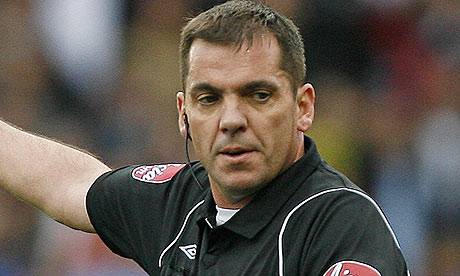
I'd like to put that decision down to the gross incompetence of which we all know Dowd is capable. How he was in charge of a cup final is simply beyond comprehension. But he saw the incident, chose to give a penalty, and then issued no further punishment. I won't say what I think that was, but it wasn't innocent incompetence.
In amongst all the raging rhetoric and theorising in the following days, one argument stood out. In essence, there was no debate to be had about Dowd's appalling conduct at Wembley. Professional fouls, if they are deemed to be so, must draw a red card. However, is there a case for changing the law?
As happens so often in football, one high-profile incident has been followed by many more like it in quick succession, the latest being Thomas Vermaelen's red card in Arsenal's victory over West Ham United at the weekend. Martin Atkinson's decision to dismiss the Belgian defender, because of its harshness, has added a different dimension to recent discussion about professional fouls. Vermaelen could legitimately plead innocence, but is it time to review the rules on professional fouls even when they are cut and dried?
In the Dowd aftermath, one suggestion was that professional fouls should be distinguished by whether they occur inside or outside the penalty area. Outside, the defender should take a red card and the subsequent suspension. That's what we're used to, what we're comfortable with. But offences inside the penalty area would be punished differently, with the penalty kick given along with a yellow card for the offender.
There is sense in that suggestion, because red cards for fouls like these risk ruining football matches. Outside the area, the attacking team would gain a man advantage; inside, a penalty provides a great opportunity to score a goal.
I think the main problem is the distinction between the penalty area and the rest of the pitch. I don't agree with that, and I'm sick of seeing defenders get away with fouls in the box which would be punished elsewhere on the field. Creating a further difference between the spaces doesn't sit well with me, although it would have had the side-effect of easing Arsenal's punishment after Atkinson's cock-up on Saturday. He would have had to decide between a free kick and red card or a penalty and a yellow.
The other option, aside from changing nothing, would be to make it a yellow card regardless of where the foul is committed. It's clear to me that this would be chaotic, allowing players to cynically take down players in goalscoring positions at will, even trying desperately to foul them outside the box. I think it would also result in a reduction of yellow cards for cynical trips elsewhere on the pitch, one of the few things I think referees are generally very good at managing.
More problematically a declassification of the professional foul does nothing for the aggrieved team. A free kick, often in a routine position, is not adequate compensation for having a clear goalscoring opportunity taken away.
I have a slightly different proposal. If indeed it is time for change - and I'm not convinced it is - then perhaps there is a compromise to be made. I would argue that professional fouls as we know them should always be punishable by a red card, not because they are terrible crimes but because it's important to respond in a way which creates an adequate advantage for the fouled team.
But should a goalkeeper who clips a striker who nicks the ball past him, or a defender who has been sent off for a professional foul and watched his team concede from the penalty, be further punished by a suspension? I'd say there is a case for making the rule more strict in terms of red cards, but abolishing the mandatory suspension (although each case should be reviewed, lest a dangerous tackle go unpunished because of its location).
What do you think?
(Pic via Watch Blackburn)


2 comments:
I think that makes a lot of sense. It is, however, academic until referees are capable of correctly judging situations that they may have only half seen, even with help from an assistant referee some distance away.
What ever the rules are, there is no guarantee that an unaccountable (when it matters) referee will get it right every time. Video technology and an off-pitch advisor, even if limited to one appeal per team per match, would allow refs to change their minds gracefully without their pride being damaged too much
Hear hear. Absolutely agree the refs need sorting first and foremost.
Post a Comment